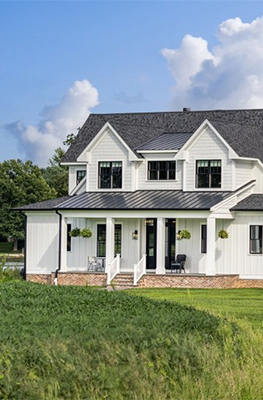






The cottage has never really gone out of style, and I don't think it ever will. Those steeply pitched rooflines, the covered porches, the intimate scale, they carry a warmth that larger, more formal homes rarely manage. What we're seeing now is a genuine renaissance of the form. Clients keep coming to us wanting that character, but paired with the open layouts, natural light, and easy livability of a contemporary plan.
Bringing the sensibilities of the classic cottage and a modern touch together gracefully is where the real design work happens.
Explore all cottage house plans from Houseplans.com.
Or see the whole Visbeen Architects collection - exclusive to Houseplans.
The Timeless Appeal of Cottage Style
The cottage has a long history in American residential architecture. From the Adirondack camps of the late 19th century to the lake houses of the Midwest, the style has always been about the connection between people, nature, and place. The hallmarks are unmistakable: steep gabled rooflines, shingle or board-and-batten siding, covered porches, dormers, and a nestled-in coziness that grander, more formal homes struggle to replicate.
Cottage design was never about pretense. It's honest architecture that wears its character on the outside and delivers real livability on the inside. Approachable, grounded, and inviting.
The challenge is that traditional cottage floor plans don't always reflect how people live today. Small, compartmentalized rooms and limited natural light were acceptable a century ago. Today's clients want charm alongside real functionality. When the cottage style is done well, it delivers both.
What "Modern" Means in Cottage Design
A cottage with a modern twist isn't a stark, minimalist box with a cedar shake roof applied as an afterthought. We take a more thoughtful approach: keeping the spirit of the cottage, its rooflines, its material palette, and sense of scale, and pairing it with the planning principles and spatial generosity of contemporary design.
What we end up with is a home that feels grounded in tradition and completely suited to the way you actually live.
Luxury Cottage Design
 Luxury Cottage Design - Front Exterior
 Luxury Cottage Design - Main Level
 Luxury Cottage Design - Upper Level
This 2,961-square-foot design carries all the hallmarks of the cottage style: steeply pitched rooflines, warm exterior materials, and a covered porch. The interior tells a different story. Three bedrooms and 3.5 baths give families real room to spread out, and the plan is organized for easy flow between the living, dining, and outdoor spaces. From the street, it reads unmistakably as a cottage. Once you're inside, it's clear this is a thoroughly modern home.
Key Design Moves That Bridge Both Worlds
A handful of decisions tend to define a modern cottage, letting a home feel rooted in tradition while living with genuine contemporary ease.
Open the Floor Plan. The biggest shift from traditional to modern cottage planning is the relationship between the main living spaces. Rather than a series of small, separate rooms, we bring the kitchen, dining, and living areas together into one flowing arrangement. We’re after visual connection and easy movement between spaces, with beamed ceilings and well-placed built-ins creating distinct areas while keeping the whole open and airy.
Maximize Natural Light. Traditional cottages were often dark by necessity: small windows, low ceilings, deep porches. Honoring the cottage aesthetic while bringing in dramatically more light is one of the most rewarding problems we get to solve in this style. We like to pair classic cottage dormers with expansive clerestory windows, or use generous glazing on the rear elevation to connect the main living space to a terrace or screened porch. The exterior stays true to character, and the interior feels bright and alive.
Mix Materials with Intention. Stone, cedar, shiplap, and board-and-batten work beautifully on the exterior of a modern cottage. Inside, we like to see clean-lined cabinetry, wide-plank hardwood floors, and minimal trim profiles sitting comfortably alongside exposed wood beams or a fieldstone fireplace. The contrast between natural and contemporary materials is part of what makes these homes so interesting, and when it's handled thoughtfully, neither influence feels like an afterthought.
Design Outdoor Living as an Extension of the Home. One of the great strengths of the cottage tradition is its relationship to the outdoors: the porch, the garden, the surrounding landscape. We like to take that relationship further. Screened porches that open fully to the interior, covered terraces designed for three-season use, and fire pit areas that function as true outdoor rooms. We plan these spaces as carefully as any interior, and the result is a home that genuinely connects inside and out.
Cottage Style Plan with a Modern Edge
 Cottage Style Plan with a Modern Edge - Front Exterior
 Cottage Style Plan with a Modern Edge - Main Level
 Cottage Style Plan with a Modern Edge - Upper Level
 Cottage Style Plan with a Modern Edge - Lower Level
This design shows how well the cottage aesthetic scales when the planning is done thoughtfully. Four bedrooms and 3.5 baths accommodate a larger family or frequent guests, and the cottage-meets-contemporary approach keeps the home from feeling oversized or formal. The roofline is dramatic and full of character. The interior is generous and well-organized. It works equally well as a primary residence or a gathering place for extended family.
Cottage Plans for Every Lifestyle
The cottage style is remarkably flexible. It works for a compact lakefront retreat and for a larger family home. It can read as beachy or woodland, rustic or refined, depending on the material palette and details we choose with you.
At Visbeen Architects, we've designed cottages across the full spectrum: from intimate two-bedroom plans that prioritize efficiency and charm to larger designs with the amenities of a fine custom home, wrapped in cottage character. The common thread is an architecture that feels purposeful and genuine, where every detail earns its place.
Working with Your Site
The best cottage plan is the one that doesn’t just look great on paper, but also responds to your specific site and setting. Topography, neighboring homes, sun orientation, the views you want to capture: all of it shapes the design.
The cottage style handles a variety of sites well. That steeply pitched roofline suits a wooded, sloping lot. The covered porch works just as well facing a mountain view as it does overlooking a lake. And because cottage massing tends toward the informal, these homes often settle into a landscape in a way that grander, more formal designs don't. They look like they belong.
We always start with the site and work inward. The best homes grow out of their settings, and that's something the cottage tradition has always understood. It's one reason the style has endured and kept finding new expressions for well over a century.
Explore all cottage house plans from Houseplans.com.
Or see the whole Visbeen Architects collection - exclusive to Houseplans.