

 1-800-913-2350
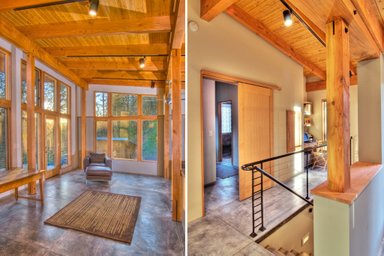
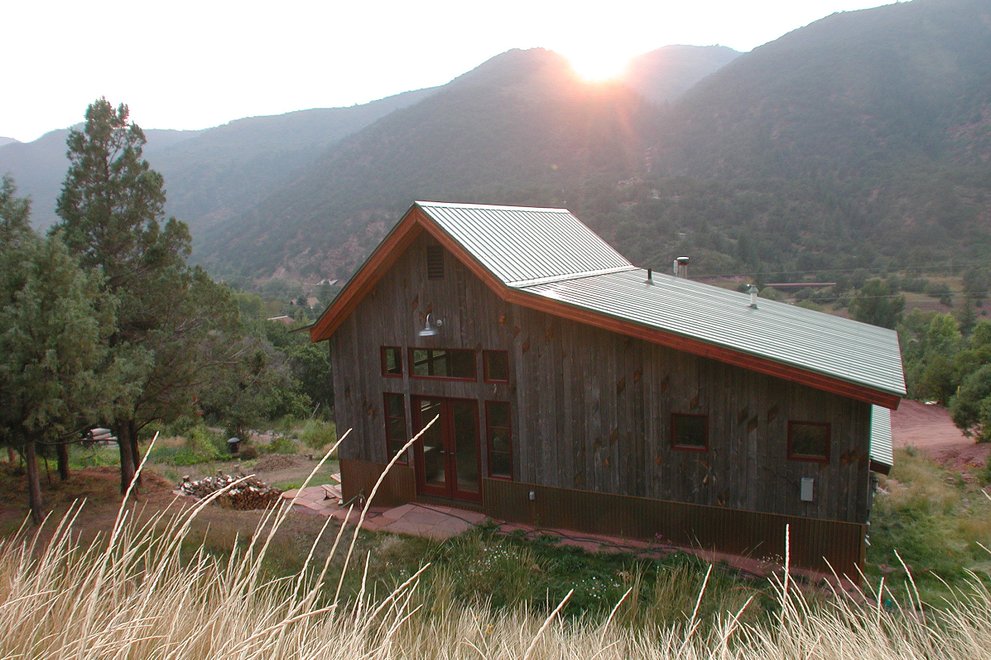
Energy independence and passive sustainability are always desirable features, but for Chalk Hill Cabin they were virtual necessities. “It’s in a remote part of the California Foothills, at almost 4,000 feet of elevation, so it sees some climatic extremes,” says David Arkin, AIA, LEED AP, of Arkin Tilt Architects in Berkeley, Calif. “It’s also several miles from the closest electrical connection, so the building envelope had to be very efficient and heat and cool itself passively as much as possible.” Its straw bale walls, finished with sprayed-earth stucco, contain substantial amounts of both insulation and thermal mass, Arkin notes. The resulting 12-hour thermal transfer cycle, he says, is “just about ideal.”
SIPs form the building’s shed roofs, which provide both mounting for photovoltaic panels and a deep overhang at the south-facing windows. Cement board siding at the cabin’s conventionally framed sections, cement board trim, and a standing seam metal roof yield a low-maintenance, highly fire-resistant shell. A ground-mounted solar thermal array provides domestic hot water. Surplus heat is shunted via heat-exchange pipes into a 3-foot-deep, insulated sand bed beneath the floor, which serves as a thermal flywheel for the living spaces....To read more click here.
To browse a collection of eco-friendly plans click here.
SIPs form the building’s shed roofs, which provide both mounting for photovoltaic panels and a deep overhang at the south-facing windows. Cement board siding at the cabin’s conventionally framed sections, cement board trim, and a standing seam metal roof yield a low-maintenance, highly fire-resistant shell. A ground-mounted solar thermal array provides domestic hot water. Surplus heat is shunted via heat-exchange pipes into a 3-foot-deep, insulated sand bed beneath the floor, which serves as a thermal flywheel for the living spaces....To read more click here.
To browse a collection of eco-friendly plans click here.