- Styles


Our Signature Plans
Shop Now
- Collections
Most Popular
By Size
Trending

Thanks for your question.
We'll be in touch shortly.
Thank you for your inquiry. Your message has been sent.
We'll be in touch shortly.
Start Your Search
- Collections >
- Farmhouse >
- Farmhouse with Basement Plans

Farmhouse Plans with Basement
A farmhouse plan with a basement foundation gives homeowners options. Maybe you want to create the ultimate game room, with pool tables, a big screen TV, and a wet bar. Or, maybe you're a movie buff and wish to turn your basement into a home theatre space. On the other hand, maybe you just need a little more space! Basements are good for all of that and more.
Want to know the best part about having a basement? Similar to (most) bonus rooms, basements usually need not be finished when the rest of the house is finished. This can be helpful if you're working with a tight budget and don't have the cash on-hand to finish everything at once.
Use the filters on this page to narrow down your house plan search. You can search by number of beds and baths, width and depth, square footage, amenity (e.g. kitchen island, or wraparound porch), and more. Take Note: Some areas may require a different foundation option. Be sure to ask your builder what's best for your area. If you're building on a sloping lot, a walkout basement might be best, as this tends to maximize your lot's space.
Similar Collections to Explore
- Modern Farmhouse Plans
- Large Farmhouse Plans
- 4 Bedroom Farmhouse Plans
- 5 Bedroom Farmhouse Plans
- Barndominium Plans with Basements
Modern Farmhouse Plan Characteristics
- Front porch
- Board-and-batten siding
- Large windows
- Dark window frames
- Clean lines
- One or two stories
- Small, medium, or large square footage
- Open floor plan
Get Inspired with These Blog Posts About Farmhouses
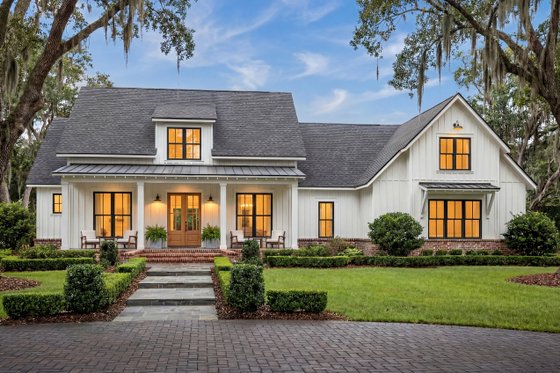
Farmhouse Plans with Basement
A farmhouse plan with a basement foundation gives homeowners options. Maybe you want to create the ultimate game room, with pool tables, a big screen TV, and a wet bar. Or, maybe you're a movie buff and wish to turn your basement into a home theatre space. On the other hand, maybe you just need a little more space! Basements are good for all of that and more.
Want to know the best part about having a basement? Similar to (most) bonus rooms, basements usually need not be finished when the rest of the house is finished. This can be helpful if you're working with a tight budget and don't have the cash on-hand to finish everything at once.
Use the filters on this page to narrow down your house plan search. You can search by number of beds and baths, width and depth, square footage, amenity (e.g. kitchen island, or wraparound porch), and more. Take Note: Some areas may require a different foundation option. Be sure to ask your builder what's best for your area. If you're building on a sloping lot, a walkout basement might be best, as this tends to maximize your lot's space.
Similar Collections to Explore
- Modern Farmhouse Plans
- Large Farmhouse Plans
- 4 Bedroom Farmhouse Plans
- 5 Bedroom Farmhouse Plans
- Barndominium Plans with Basements
Modern Farmhouse Plan Characteristics
- Front porch
- Board-and-batten siding
- Large windows
- Dark window frames
- Clean lines
- One or two stories
- Small, medium, or large square footage
- Open floor plan
Get Inspired with These Blog Posts About Farmhouses
Farmhouse with Basement Plans Q&A / FAQs

What are the key characteristics of farmhouse plans?
Traditional farmhouses draw on classic rural architecture with their gabled roofs, spacious porches, and practical floor plans. Modern farmhouse plans build on that timeless aesthetic, refreshing it with sleek materials, larger windows, and contemporary layouts that are open and bright.
A farmhouse plan blends the charm of country architecture with the clean, streamlined look of contemporary design. These plans feel warm and inviting while offering open, functional spaces and modern amenities.
Farmhouse Plan Characteristics:
- Welcoming front porch
- Board-and-batten siding
- Expansive windows that invite natural light
- Striking dark-framed windows (usually quartered)
- Simple, well-defined lines that balance rustic charm with contemporary style
- Flexible layouts (in one or two stories)
- A wide range of sizes
- Bright, open-concept floor plans
What are the typical cost considerations for building a farmhouse plan?
Farmhouse building costs can range anywhere from modest to high, depending on your choices and location. Your final price will be shaped by factors like size, style, finishes, and where you build.
Key things to consider include:
- Home size and layout: Larger farmhouse plans cost more overall but can be more affordable per square foot than smaller designs.
- Location: High-cost areas or strict building codes can raise expenses, so check local requirements early.
- Labor and construction: Skilled labor rates vary by region and can impact the budget.
- Materials and finishes: Flooring, fixtures, and other design choices can quickly change the total price.
What makes a great farmhouse plan design?
A great farmhouse plan design brings together classic charm and modern comfort in a way that feels warm and welcoming. Key features like a gabled roof, roomy wraparound porch, and vertical siding create that timeless farmhouse look.
Inside, open floor plans filled with natural light make the home feel spacious and connected. Rustic details (like shiplap walls and exposed wood beams) add cozy character without sacrificing today’s practical living needs. Spacious kitchens and outdoor living areas complete the picture, blending style with function. Whether traditional or modern, a well-designed farmhouse plan captures a simple, inviting lifestyle that’s both charming and livable.
Can I customize a farmhouse plan to fit my needs?
Absolutely! Customizing a farmhouse plan is a great way to make the space truly your own. Whether you want to adjust the footprint or fine-tune finishing touches, our team can help you tailor any plan to fit your needs.
Here are a few of the most popular modifications:
- Add, move, or expand windows and doors
- Raise or lower ceiling heights
- Extend or reduce the overall layout
- Reconfigure room arrangements for improved functionality
- Adjust the number of garage bays or convert space for storage
- Refresh porches, patios, or other outdoor living areas
- Update or swap structural and exterior materials for a new look
What are the most common features of traditional farmhouse architecture?
Traditional farmhouse architecture boasts timeless style with features like steep gable roofs, big front porches, and wood siding. Natural light floods open rooms, while details like exposed beams add rustic character that’s effortlessly inviting.
The most common features include:
- Wide front porch (sometimes wraparound)
- Board-and-batten siding
- Large windows
- Clean lines
- One or two stories
- Open floor plan
- Gable roof
How does a modern farmhouse differ from a rustic, classic, or traditional farmhouse plan?
Modern farmhouse plans showcase clean, contemporary lines with cozy farmhouse warmth. They feature open-concept layouts and sleek finishes that feel fresh but inviting.
Rustic, classic, or traditional farmhouse plans lean into vintage charm, with reclaimed wood, stone accents, and a lived-in look. Both celebrate simplicity, but one feels modern and airy, while the other embraces cozy, traditional features.
What are the pros and cons of open-concept layouts in farmhouse plans?
Open-concept layouts in farmhouse plans offer several key advantages and some notable drawbacks.
Advantages:
- Spacious, airy feel
- Enhanced natural light
- Flexibility
- Effortless traffic flow
- Encourages social interactions
Disadvantages:
- Limited wall space
- Reduced privacy
- Can be noisy
What farmhouse floor plans work best for small homes under 1,500 sq. Ft.?
Small farmhouse floor plans under 1,500 sq. ft. make the most of every inch, blending classic details with unfussy modern living. Open-concept floor plans bring kitchen and living spaces together, while deep porches offer welcoming outdoor retreats. See some trendy examples below, or explore our collection of small farmhouse plans, which features hundreds of farmhouse-style designs under 2,000 sq. ft.
What farmhouse plans are best suited for families who expect to grow?
A farmhouse plan designed for a growing family feels easy and spacious. Communal zones (the kitchen, living, dining) stay open and connected, creating a natural flow. Bonus spaces take the pressure off. Think mudrooms, lofts for homework or play, extra bedrooms, and more. There’s plenty of room to adapt over time. Here are some farmhouse family plan examples:
What are some affordable farmhouse plan options for first-time builders?
Dreaming of a fresh farmhouse look without breaking your budget? Check out these laid-back plans. They’re great for first-timers: lots of hangout space, a porch to relax on, and a cool mix of classic charm and smart design.
Are there farmhouse plans that include a wraparound porch or outdoor living space?
Yes, many farmhouse plans include a wraparound porch or outdoor living space. See some of our favorites below.
How do farmhouse designs adapt to different regions and climates?
Farmhouse designs can be adapted to fit different regions and climates. In hot, humid areas, they often include wide roof overhangs and raised floors (like a pier-and-beam foundation) to help keep the home cool. In dry, sunny climates, materials that resist fire and provide shade are usually preferred.
 1-800-913-2350